
Frontier Airlines: My Flight Proved That Even Zero Expectations Can Be Optimistic
For years I said I would not fly Frontier until the airline installed Wi-Fi. In my world of IFEC, digital systems, and passenger experience, that was more than a preference. It was a personal rule. Flying without connectivity has always felt like stepping back in time.
But this time I chose to break that rule. A colleague I trust encouraged me to give Frontier another look, especially for simple point A to point B travel. There was also real value in seeing the airline before its planned upgrades begin. Frontier is about to make changes to its onboard product, and watching an airline at this stage of transition reveals far more about leadership priorities than most people realize. What they fix first, what they delay, and what they consider acceptable tell you how the organization actually thinks.
Why I Broke My Own Rule
To get a fair baseline, I needed to experience Frontier exactly as it is today. That meant accepting a flight with no Wi-Fi and no entertainment. My colleague and I purchased the Business Bundle with a blocked middle seat. I’ve grown to appreciate this layout after flying business class on many European airlines, because the extra personal and shared space noticeably improves the cabin dynamic by eliminating the usual elbow battles found in premium economy or even some domestic premium cabins.
My initial impressions were mixed. The price was great, and the booking flow mostly worked, although it showed the sort of corner-case glitches that should not still be appearing in 2025. The disruption assistance option was interesting, but I skipped it to have the standard experience. And then there was the core issue of being completely disconnected for three hours. That is a very different experience from dealing with poor or inoperable Wi-Fi. When a system exists on the aircraft but fails, there is at least some sense of hope.
To Frontier’s credit, when I commented on Barry Biffle the CEO’s LinkedIn post asking about Wi-Fi timelines, he replied directly: "Pretty soon. Providers are getting hungry. I see a deal soon.” It’s rare to see that kind of direct engagement from the top, and it’s telling that leadership genuinely understands that inflight connectivity has become something passengers simply expect.
What the End-to-End Journey Revealed
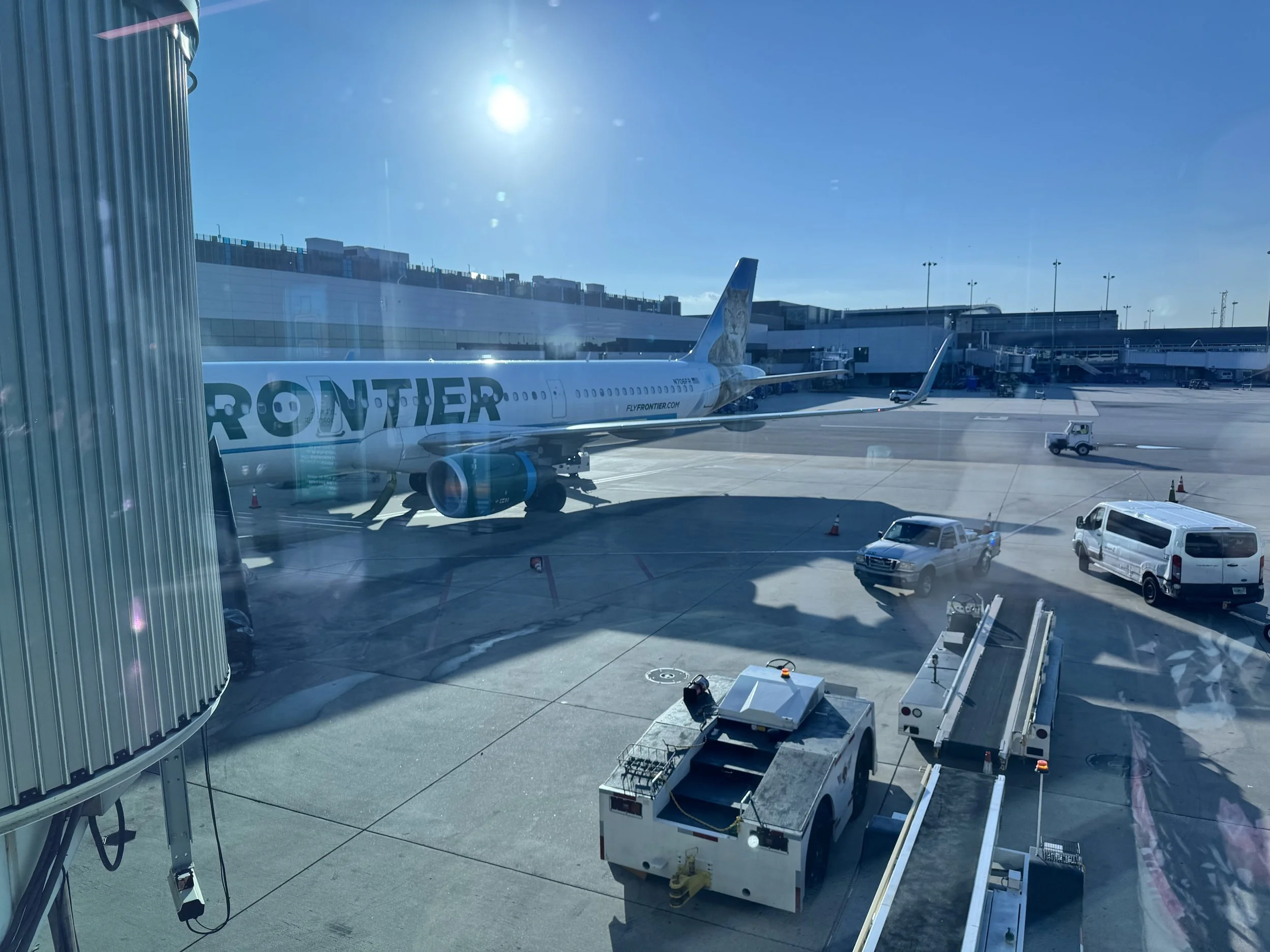
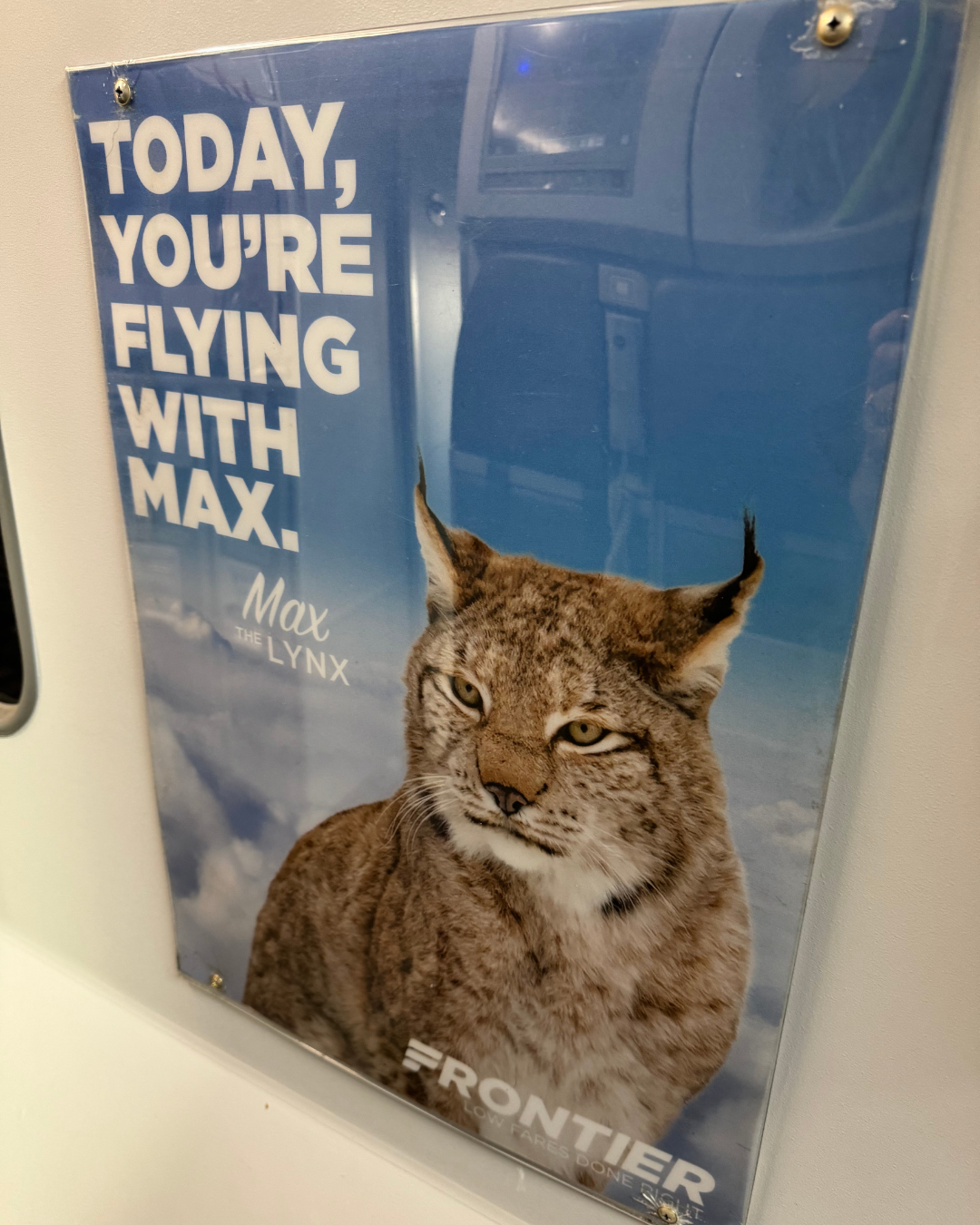
Max the Lynx
Our A321 flight on 'Max the Lynx' was on time and uneventful. They got us from point A to point B. However the full journey from booking to arrival showed several gaps that matter if Frontier wants to play in the space of more premium experiences. A few observations include:
1. Friction Everywhere
Booking glitches, persistent upsells, and bag tags that would not print at shared kiosks created unnecessary frustration. For a ULCC that aims to be efficient, this works against the model.
2. The Mobile App
The mobile app offered only the basics but it was sufficient. I would have preferred to see more clarity in the section related to baggage. When my colleague asked me to check amenities during boarding I laughed and said remember this is not United Airlines.
3. Safety Oversight Issues
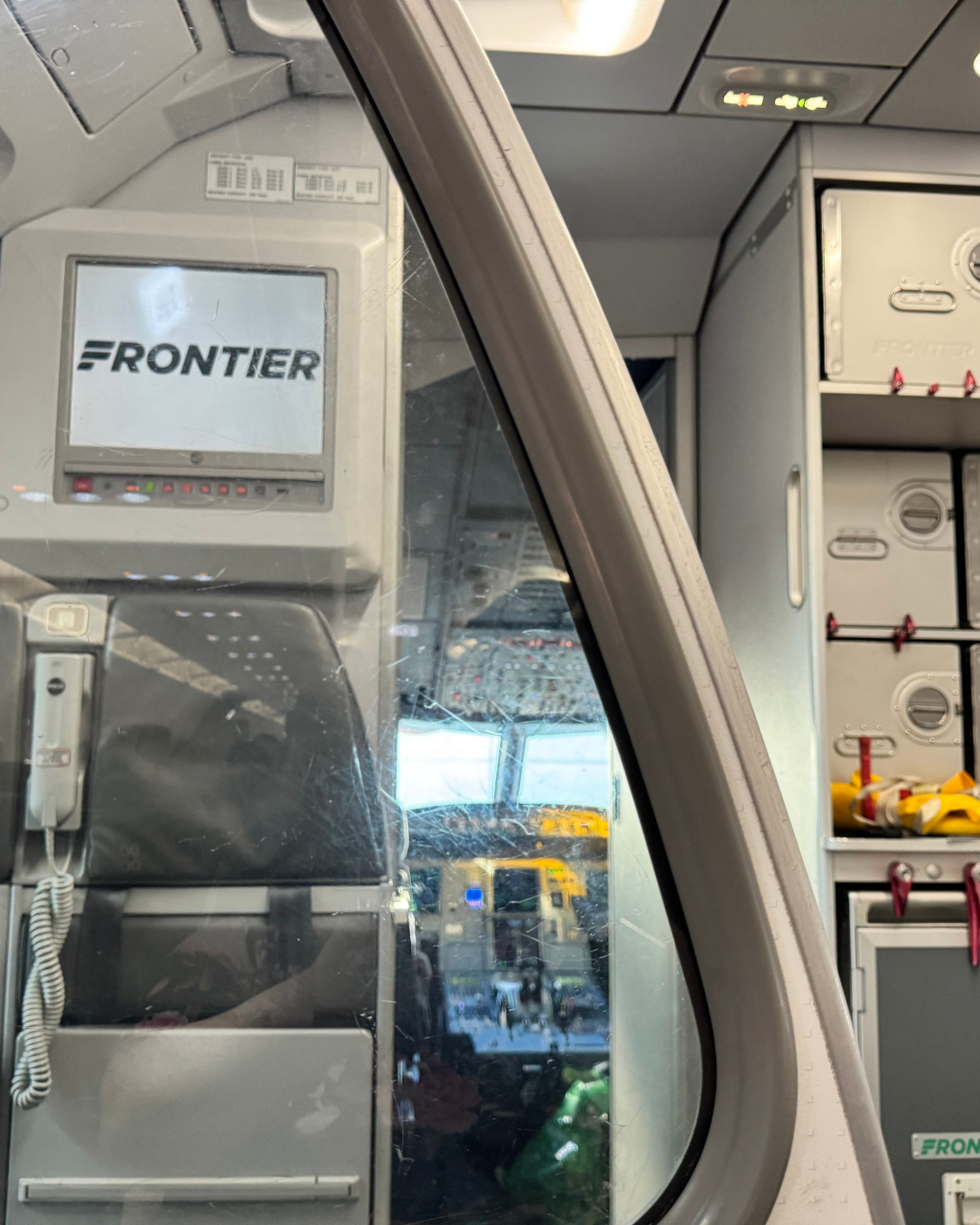
A laptop remained unsecured in the bulkhead during taxi and takeoff. From what I observed, that did not align with the safety practices I normally see during those phases of flight on other airlines.
Laptop unsecured during take off.
4. Professionalism and Cultural Signals
The crew handled the essentials, but the interactions did not reflect a consistent service culture. I overheard one flight attendant quietly mocking a colleague’s announcement for using the word illuminated instead of just saying the light is on. It was a small moment, but it said a lot.
5. Lavatory Low Point
I usually avoid lavatories unless I am in a premium cabin on a premium carrier, but this time that was not an option. Disposable toilet seat covers were not provided, and this was, quite frankly, the moment when the experience fell below even my very low expectations and below an acceptable standard for me. For men, the absence is an inconvenience. For women, it removes a basic hygiene option. The impact is not equal, and it matters.
A Candid, Non-Industry Perspective
I was seated in 1C, and the young man in 1A, let’s call him Johnny, offered a candid, non-industry perspective that echoed much of what I observed. He was a devoted Delta Airlines loyalist with a mix of U.S. and international economy experience, having flown Delta, United, Frontier, Spirit, and Emirates. When asked why he loved Delta, he said simply, “They have the screens and I can watch anything I want.”
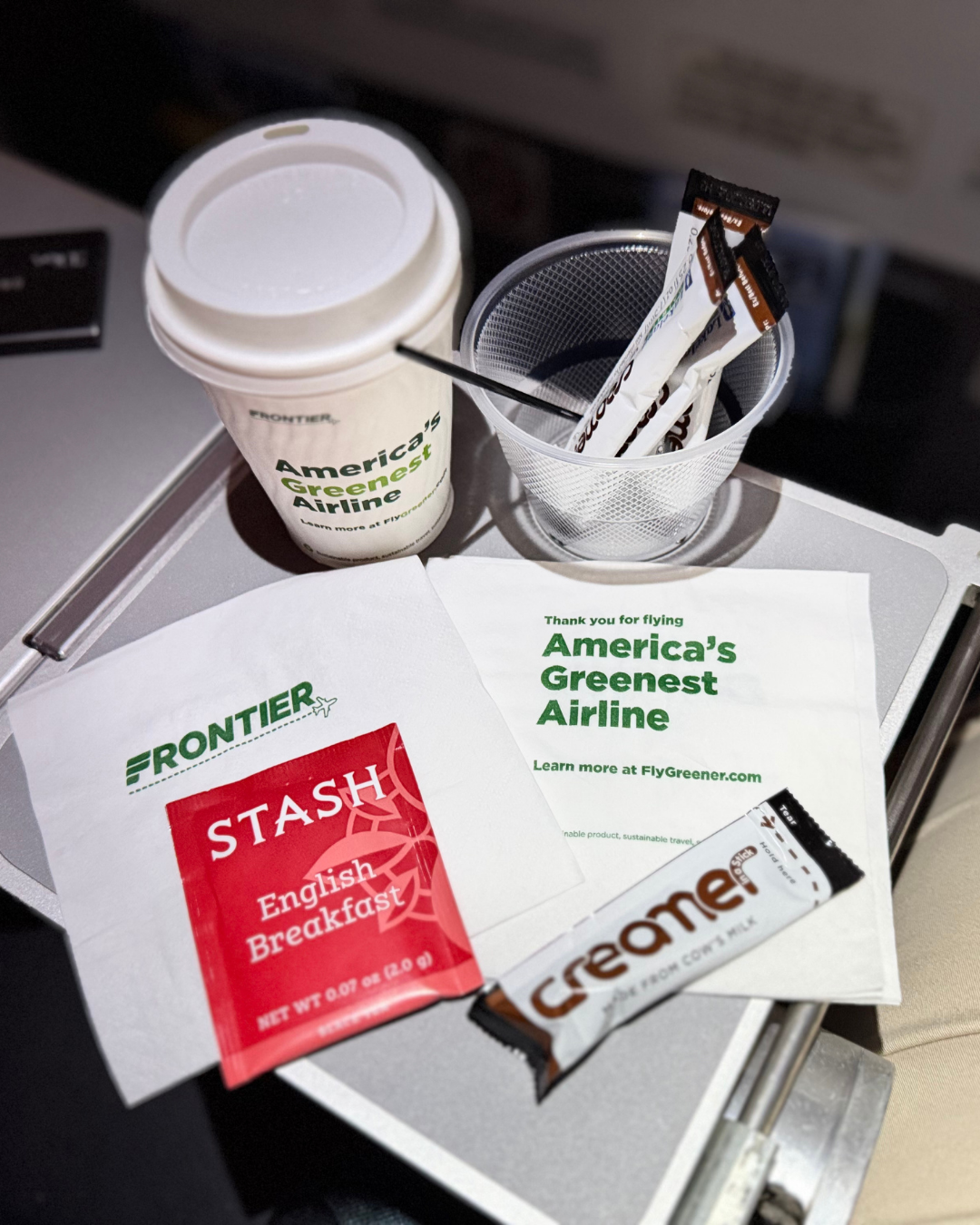
When Johnny learned coffee had to be purchased, he rolled his eyes, leaned over and whispered to me, “That’s why I love Delta.” When he asked the flight attendant for power outlets and was told there were none, the eye roll returned. Later he said that he actually prefered Spirit to Frontier because they had Wi-Fi, and the cabin felt newer.
I agreed and told him that on some LAS to SNA trips I have chosen Spirit’s Big Front Seat because the value beats many of the major carriers. Johnny end up on Frontier because he needed to get to his family the weekend before Thanksgiving and the schedule and priced worked for him. Johnny did mention that he did not pay for UpFront Plus but he was assigned 1A at the airport. It was interesting that the extra space did not matter to him but rather the lack of entertainment, power outlets and paying for coffee.
My colleague traveling with me, who is well-traveled on many premium carriers, was clear that they would not fly Frontier again.
Best House, Worst Neighbourhood
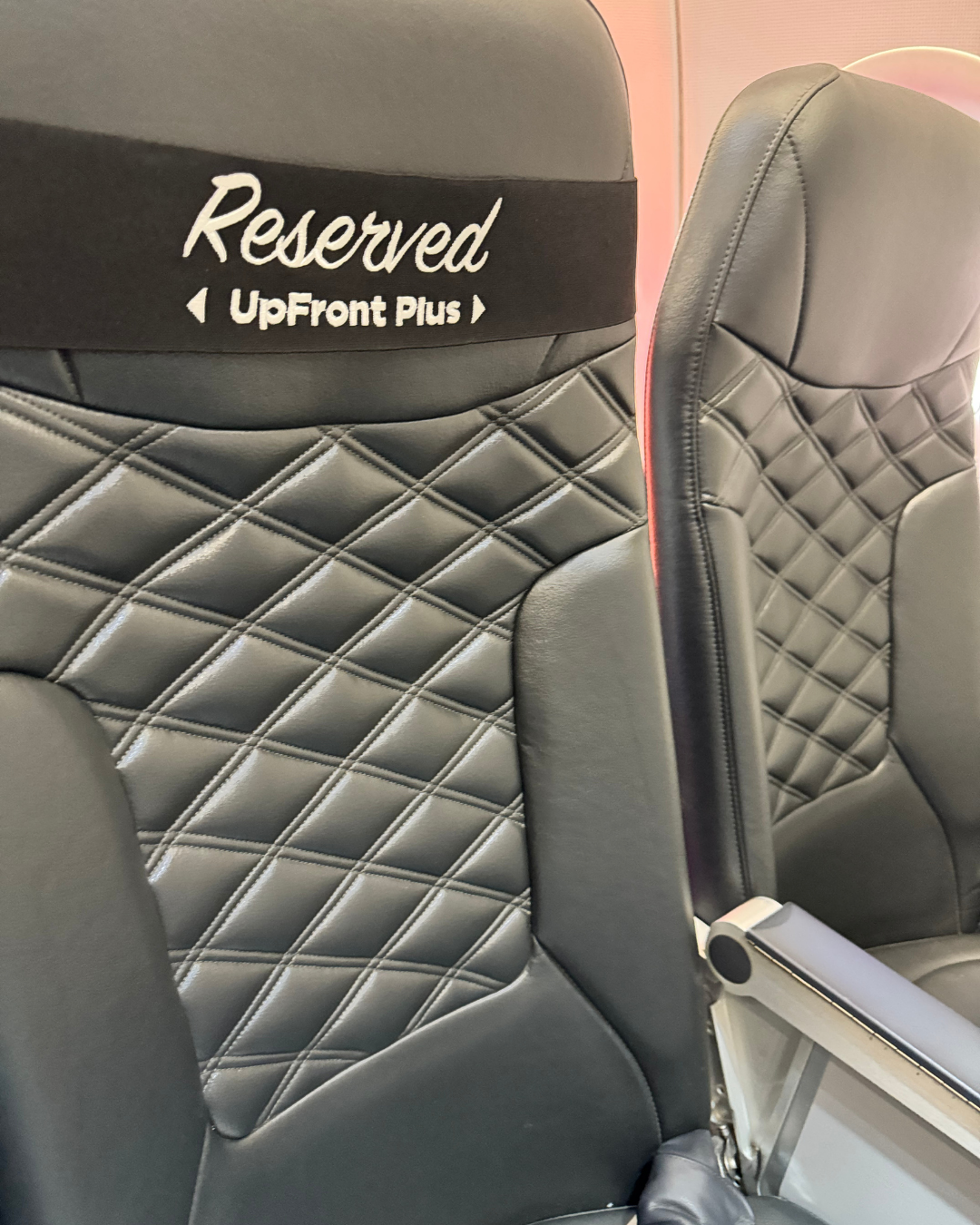
The blocked middle seat delivered exactly what it promised, more space and fewer elbow battles. But even Frontier’s most premium option still felt like the best house in the worst neighbourhood. Basic economy on the major U.S. carriers may be stripped down, but it operates within a far more sophisticated digital, operational, and service environment. By comparison, Frontier’s enhanced product felt limited compared to what many passengers now consider standard.
UpFront Plus middle seat that is blocked.
A Brutally Clear Baseline
This flight gave me a clear and honest baseline. In my view, Frontier will not close its competitive gap with cosmetic changes alone. Real progress depends on strengthening digital foundations, IFEC capability, operational consistency, and service culture.
New seats might help, but without deeper changes they will remain surface-level upgrades instead of meaningful transformation.
Insights That Raised Bigger Questions
This trip reinforced how far the rest of the U.S. market has advanced in digital maturity, onboard experience quality, and connectivity. Frontier’s gaps were more obvious by comparison.
The experience also raised bigger questions about how the industry is evolving and what passengers are being asked to trade off. That is a conversation for another day.
What Comes Next
This flight was more than simply getting from A to B. I cancelled a premium ticket on one of the Big Three to fly Frontier instead. It sounds strange, but I am glad I did. Not because Frontier impressed me, but because the learning was valuable. Watching Johnny in 1A and my colleague in 1D respond to each part of the journey was also very revealing.
Now I have a baseline shaped by friction, limitations, and missed opportunities. I am looking forward to seeing how their upcoming upgrades come together and how the experience evolves once they are in the air.
Disclaimer
This article reflects the personal views of the host and their individual experience as a paying passenger on a single Frontier Airlines flight. It is not a comprehensive assessment of Frontier Airlines or any other carrier. Service levels vary across routes, aircraft, crews, and operating conditions, and readers should consider their own circumstances when evaluating travel options. The examples shared here represent selected observations from the journey. They do not include every issue encountered, and there were additional details and experiences not covered in this summary. Nothing in this article should be interpreted as professional advice, nor does it represent the views of any employer, client, or industry organization with which we are affiliated. Any mention of companies, products, or services is for descriptive purposes only and should not be interpreted as endorsement, criticism, or comparison beyond this personal experience.